


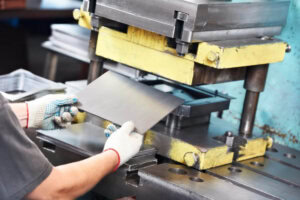
Manufacturers often rely on processes that can deliver hundreds of thousands or even millions of pieces as quickly and uniformly as possible. Progressive die stamping can quickly transform two-dimensional blanks or strips of metal into highly complex or intricate three-dimensional goods while meeting stringent production requirements. Look closer at how progressive die stamping offers standard…
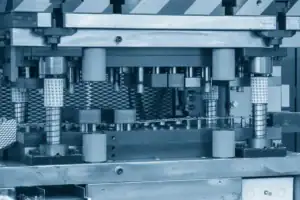
The Power of In-House Tooling: Ensuring Precision in Progressive Die Stamping
Precision and efficiency play a critical role in modern manufacturing, particularly in progressive die stamping. While this process is often complex, it can provide consistently excellent quality in stamped parts, along with faster turnaround and improved client satisfaction. With in-house tooling, you can also benefit from optimized control and integration, which contribute to reduced project…
Precision for the Road Ahead: Progressive Die Stamping for Automotive Components
Automotive systems depend on metal components engineered for specific industry requirements. Safety, reliability, and performance all hinge on maintaining dimensional accuracy and close tolerances throughout production. As vehicle programs grow more complex with tighter production timelines, OEMs and aftermarket suppliers rely on high-quality die stamping to provide speed without compromising on reliability. Progressive die stamping…
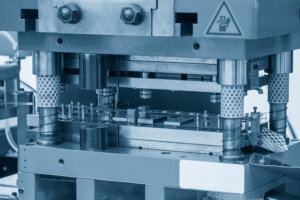
The Role of Progressive Die Stamping in High-Performance Components
In the power tools industry, there is an expectation of performance and reliability every time a tool is used. From industrial-grade saws in manufacturing plants to handheld drills used on construction sites, power tools must stand up to heavy use job after job. One thing that contributes to reliable performance is the quality of the…
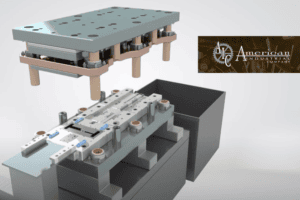
Animation of The Progressive Die Stamping Process
We here at American Industrial Company are thrilled to announce our latest resource for manufacturers and engineers interested in learning more about the progressive die stamping process. An animated video! This in-depth look into progressive die stamping is for those interested in understanding the process from a visual perspective. By clearly illustrating each step and…
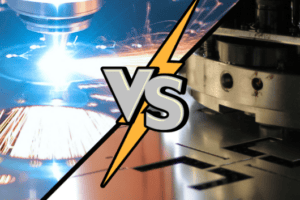
Laser Cutting vs. Metal Stamping
When deciding between laser cutting and metal stamping processes, there are a number of process-specific advantages to consider. Laser cutting requires no upfront investment in tooling, reducing the turnaround time of projects significantly. On the other hand, metal stamping can better support high-volume, repetitive part production. Both techniques can deliver a range of metal components…
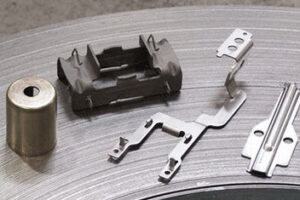
Material Selection for Progressive Stamping: Factors and Trade-offs
Progressive stamping is an accurate and cost-effective method for automated metal forming that can achieve high production volumes without compromising product quality. By incorporating several steps into one metal forming process, progressive die stamping allows manufacturers to produce complex goods using the best metals for stamping without straining the substrate or interrupting production. Based on…
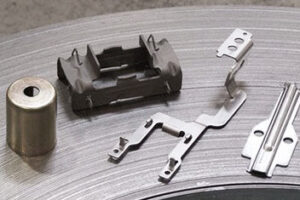
Ferrous & Non-Ferrous Metal Stampings
Both ferrous and non-ferrous metals are suitable for precision metal stamping, each bringing unique advantages to their end-use applications. American Industrial Company (AIC) is an industry-leading fabricator of precision, high-quality non-ferrous metal stampings with over 30 years of experience. With expertise in a wide range of industries, AIC can help you with all your stamping…

Metal Stamped Parts for the Military and Defense Industries
Defense and aviation equipment – from equipment trailers to aviation equipment to armored ground support vehicles – rely heavily on metal stamped components. Metal stamped parts are crafted from sheet metal, which is formed into a predefined shape by highly specialized metal stamping machinery and supporting software. In the production of essential components, like aviation gauges…

Why Metal-Stamped Components are crucial for the Aerospace Industry
Commercial aviation manufacturers continually strive to improve their vehicles’ fuel economy and passenger comfort. Additionally, aerospace OEMs must adhere to stringent safety guidelines as specified by governments and industry groups. These competing pressures mean that aviation components must be designed to the tightest tolerances possible. At every step of the process, from concept to tooling…